Thursday, 20 April 2017

GAFE 2017- Opening Keynote

I am very excited for my first ever GAFE Summit in Auckland. This blog will document all of the great learning from this amazing event.

Opening Keynote: Iteration and Innovation in Education by Jaime Casap

"What we need more than anything in education is a culture of innovation and iteration in order to take new learning models supported and enabled by technology to create student focused learning environments structured to help empower our students to build lifelong learning knowledge, skills and abilities." Description from GAFE website. 

You can connect with Jaime Casap on twitter: @jcasap

Why do we care about education?
Around the world we believe education is important because it disrupts poverty! Jaime linked this to his personal experiences he said "I get to be here today because of education!" The experiences he has had he has because of education. This is true for me and many others, the education we have provided us with opportunities and experience that we can treasure. If you work hard and get your education you can do ANYTHING!

No matter how long you teach for if it is 2 years, 10 years or more you can impact generations. To impact students for years to come. With this impact we have we need to take sure we take education very seriously. We don't live in a world where we can prepare children to sit behind a desk and do the jobs that computers do now. We need to take the best of education and take it to the next level. What role does technology and computer science have?

We keep talking about preparing learners for the 21st century BUT we have learners that will be working in the 22nd century. In New Zealand and around the world computer science and technology are hug job areas and for this reason they are becoming more and more the focus of education.

Jaime explained that we have been talking about computer and technology in education. So what is different now? We now have research shows how technology can support learning. We can now do more, personalise because of technology.

Technology is a part of everything we do today. It wraps around everything we do. Have you used technology today? Well you must of because you are here. There was a time when it wasn't so easy to use the internet but the children we teach never knew that time. That is not to say they are wired differently they still do two things at the sametime poorly, They just think differently about education. These children learn by going out and learning they don't wait for someone teach them. Yes they learn mistakes and we have to work on that and really think about what this generation is facing.

The technology we have now is not even close to what is coming. Children these days can put glasses on and travel anywhere virtually. We can merge the real word with AI. What does this mean for these children? Robots are replacing jobs even driving will be taken over by robots.

Skills needed in a technology world:


The questions we use to ask don't make sense anymore, for example what do you want to do when you grow up?

WE should be asking what problem do we want to solve? & what do you need to know to solve this problem? Who can you connect with to help you solve this problem?

Iteration is a result of critical thinking-Feedback and feedback loops allow for critical thinking they are more important than grades.

Collaborations is how we solve real problems, in a real world we have to work together to innovate and to solve problems.

We need to teach children who are digital learners, who think critically about technology.

We therefore need a culture shift...How do we take educations to the next level? When need to need to memorize things and when is does information become a commodity. We need to ask questions that google can't answer give learners real world problems to solve.

You can start Google anywhere but it takes time! The future classroom is tomorrow, it is what we do in our classrooms. What we take away from others and use to create change and support problem solving. We are only at the beginning, 40% of the world are online. We are at an exciting time in education. For a 5 year old the greatest technology we have today will be the worst they see in their life. Do we have the right process in place to help them place that they are doing to need to thrive and build the skills to solve the problem of their world!


Monday, 3 April 2017

Inquiry update

As the end of term one quickly approaches it is a great time to share what I have achieved in my inquiry this term. Term one has been a very busy term for my class with swimming and other events. This term my focuses group a long with the rest of my class have been involved in building the skills and environment needed to have positive discussions about numbers and how we manipulate them. 

This learning has happened within our maths groups as well as during our Friday maths challenges in which we work in mixed ability groups to support each other to build knowledge and key competency skills. 

I would love any feedback our ideas has to how I can further my inquiry. 

Monday, 13 March 2017

Blogging is Rewindable too!

Today we had a wonderful staff meeting in which we build on our knowledge about rewindable learning from last year. This year we discussed how our blogs and the blogs of our learners can be made more rewindable by using labels effectively.

This year I used Labels for my learners these are: Maths2017, Writing 2017, Reading2017. I think it could be better for the learners in the future if I divided up these labels to make it Reading,  2017 so that they can have a full record of reading and what they did in 2017.

Another thing we discussed was how to make sure that the feedback we give in Doc is rewindable by putting them on the blog. We discussed perhaps using Google keep to keep these comments and add them to the blog so that they can be reflected back on.


One of the things that happened during the Summer Learning Journey was that dialogic conversation happened on the learners blogs. Can we realistically get this dialogic discussion happening digital with our teachers given our busy lives? I hope so but I am not so sure watch this space.

Audience, Learners knowing that they have an audience and who they are important. This is built for our learners through twitter feeds that automatically tweets their post.


Blogger Tips

Schedule posts
This can help to keep our class blog alive so that the wider world can still connect with us.
Keeping a blog up to date is important we need to JUST DO IT!
Can you get the kids to email the post to blogger?

Blog Layout
When it comes to your landing page what do you see? Can you get to old post? Can you see the comments so see who is engaging with you?


Thursday, 9 February 2017

Inquiry focus 2017

As I have discussed in previous posts the beginning to my year has be fueled by the idea that we are voyagers setting out to explore the unknown but always knowing where we are and where we have been.

After listening to the research feedback I had to think very carefully about my inquiry focus. As a school we are aware that the feedback suggest accelerate shift in reading but not as much shift in maths. This is why our inquiry focus this year is mathematics.

There are many factors that have influenced my think about my inquiry including, what Stuart McNaughton had said about interpersonal skills, key competencies and critical thinking and my dissertation in which I plan to focus on fluency video self modelling and peer feedback. This lead to think that feedback was a link between my dissertation and Stuarts ideas and that this could perhaps support critical thinking and discussion in mathematics.

This lead to my inquiry question: How does peer feedback affect progress in mathematics with my target group?

Peer feedback occurring in a maths group helping learners to form their picture of numbers and strategies. 

To start my inquiry I need to think about what this feedback looks like. I believe that it may be best in a discussion form in which student given feedback to each other including questions which opens up discussion about numbers and strategies.

I believe that the best way of achieving this discussion is to have open problems in which student work with different numbers (number that they choose from options given in context) using the same strategy. This allows them to given feedback around how they strategy worked and what they noticed about the numbers.

I still feel I have a lot of clarify to do and part of that process will be observing others to see how maths discussion happen around our school. This I hope will help me to develop my teaching to better support student voices in the feedback and discussion process.

It is also important that student share their maths on their blogs and that this is done creatively.
Some ideas I have around this at this stage are:

-Sketchnoting using google draw and/or pixlr
 -Video descriptions of what they did and why
 -using mini whiteboards and ipads to record problem solving.
- Audio/movie
- EE/educreations - Used to record thinking as group is working and solving.

I am excited to see how peer feedback can support discussion and build understanding in mathematics. I will keep you updated on my progress as I continue to inquire into my practice.

Tuesday, 7 February 2017

I am a voyagers and research helps me on my journey!

Today we gathered as a cluster in the Tamaki College hall to listen to the findings and future focused ideas presented by the researchers.

Before starting the presentation Russell Burt announced that Manaiakalani is now a COL (Community of learning) however while this official COL recognition is great it made me think that since I arrived last year I have already been part of an amazing community of learning and that while this would change in some ways the role people have it will not change my feeling of being part of something bigger than myself.

It is together that we innovate, learn and do more for the future.

Sitting in the hall I was reminded of something that has come up a lot for me in the weeks leading up to this presentation. A simple statement with a real and lasting meaning that is backed by the story and Movie Moana. The ideas is that We are voyagers, who need to know where we have been and where we are chart and plan where they are going.

Today's discussion started with Aaron Wilson talking about where we have been.
He took us through the data. My big take way was that we have done a lot in the past especially to improve writing in which we are getting accelerated shift against the norm however there is still much to be done and our progress must be maintained as we venture on with the aim of seeing the same accelerated shift in reading and maths.

This discussion was followed by Stuart McNaughton discussing with us the interpersonal skills and key competencies our learners need. He discussed critical literacy and suggest that we see low rate of achievement in critical literacy. The best place to teach critical literacy in the act of being literate.

We should also encourage learners to be critical of their action and reaction. Ask them to think why is it that my actions had a negative effect on my group? We should be thinking critically about our social skills as well. We need to think about how we build arguing and critical thinking skills in groups.


Another area Stuart discussed was self control. He suggested that children are much more aware of needing to be self controlled online however we need to give the learners strategies for building self control.

He also talked about the interpersonal skills of empathy and compassion. He said that
children who read more books tend to be empathetic. this is because well written narrative text help learners to consider others views. It seems that many of our learners have strengthens in this area.

We do however need to consider how we help learner to put themselves in others shoes when online. To make digital personal again so that learners learn to tell when someone is upset online and think would I like it if.....How is the best way to interact and react to others online.

Lastly he suggested that teaching of these skills needs to be part of teaching other curriculum areas.


I have to admit it all seems like a huge challenge one that I am ready to take on but first I need to decide on a starting point. Listening to expert researchers present challenges reminds me how very privileged I am to be in an innovative school and community. A community that is not afraid to look at itself and say that failed lets try something different. A community that invites others to give input, to be critical and to challenge us. It is because of these researchers along with many others that I feel challenged to alway do better, try harder and keep going on my voyage no matter how rough the sea is.

So thank to all those who are part of the Manaiakalani community setting expectation high for both learners and teachers!

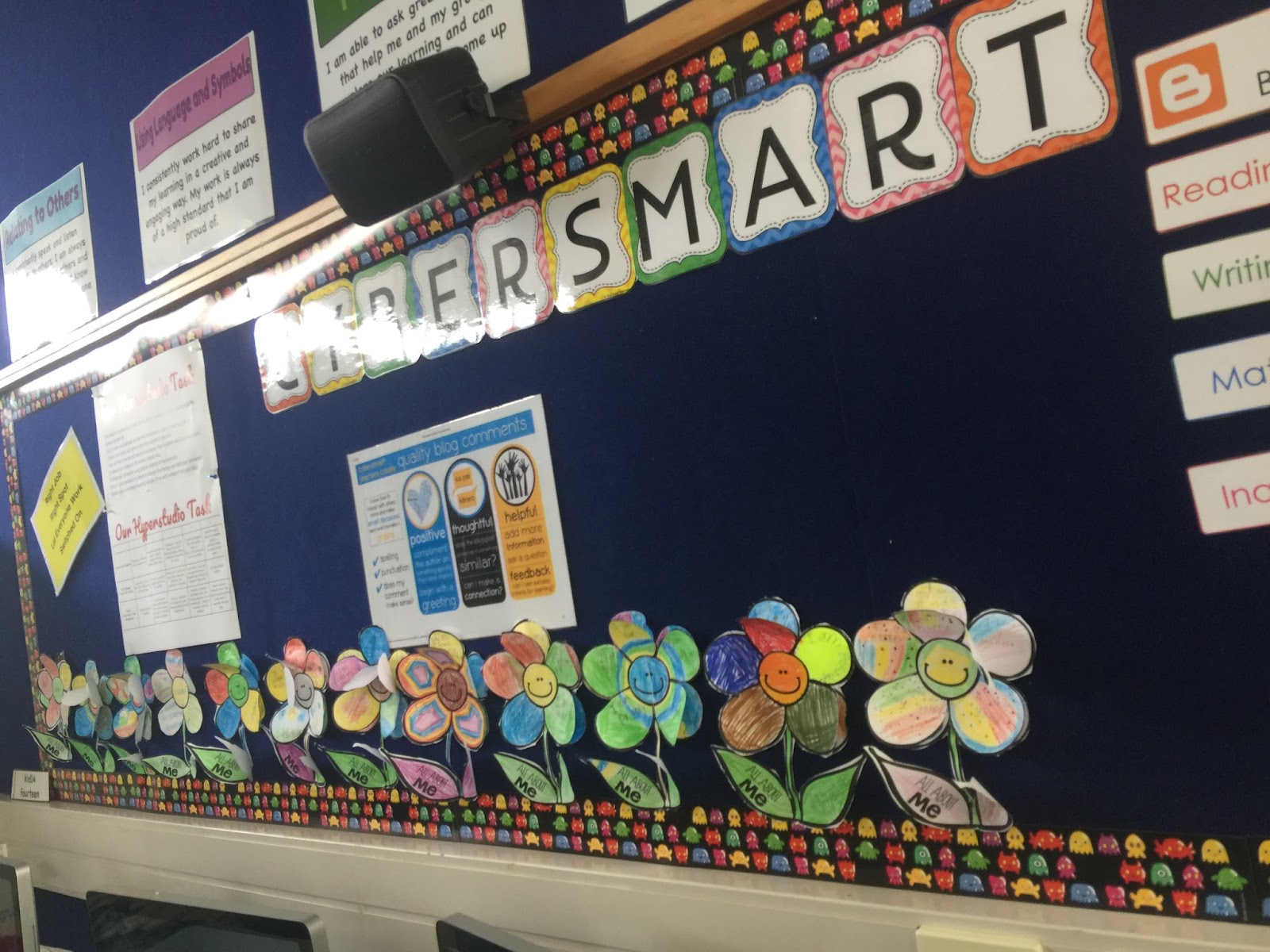
A new year, A new room and New learners!

The beginning of the 2017 school year has seen a lot of exciting changes for me. This year I am in my own space with a wonderful group of 30 year 3/4 learning. I have to admit after one week I am already feeling tired but also excited for every moment of learning we will share.


My first week was amazing! The children of room 14 are loving, kind and enthusiastic learner who are ready to try new things.


My big focus for week one

My big focus the first week was be routines, expectation and getting to know each other. In room 14 we start the day with the roll followed Mihi and Waiata I have really enjoyed introducing this to the class and I feel this sets us up for the day really nicely.

To start the year i put all the learners in teams, their bags hang in there team, they sit on the mat in their team, their chromebooks are labels in teams and even their boxes for their books sit in team groups. This has really help me to support the learners to feel a collective sense of responsibility and helped them to support each other. They all gain points as a team. I have found that this work really well both for management as there are only 6 learners in a group and for building collaboration and collective responsibility.

I am really enjoying teaching in room 14 and look forward to many more wonderful learning adventure to come.

Tuesday, 17 January 2017

Future-focused learning in connected communities

Yesterday was the first day of our university summer school paper. As part of our first day we had to share an activity related to one of the readinging. I choose the report Future-focused learning
in connected communities. This report discusses the need for changes in our education system to make sure learning is future focused. This report has 10 main goals, it suggests that some of the goals should be met by 2017. As part of the activity we discussed what we had achieved as schools and as a system. Below is the presentation we created as a group.