Showing posts with label GAFE. Show all posts

Wednesday, 17 April 2019

Sticky learning with Hyperdocs Lisa Highfill


Often as teachers we see a resource, for example a HyperDocs and see it is invaluable. We must remember every resource is design for a purpose in a place and we must be reflective on how it can be valuable to our context and learners and be designer who draw on others practice. 

First we looked at three example HyerDoc lessons and I found that these are very similar to what I already do in the classroom just adjusted for my level. She said what makes a good HyperDoc is the for c, connect, collaboration, critical thinking and create.  She talked about getting children to explore before they explain. 


We want to bring about emotion and empathy. "Can you make a difference in someones life?" How will you go out in the world and make a difference. 

When you are leaping into something new. Don't do it too often or children get bored. She suggested that you do one Hyperdoc a term. It is about what is the thing that makes learning stick. 

A Hyperdoc is not a teacher! The teachers is moving, engaging students and providing scaffolding. 
This is a maths lesson gave me ideas for how to get the children doing DMIC and Evaluating each others ideas. 

It is about building in the support from the teachers in the design of the lesson plan. We can constantly be think about how we support the children we teach in our lesson design and digital scaffolding. 

We must always be a reflective teacher, keep what you love and adjust the rest to be what your children need. 

Lisa, talked to us about her youtube. She shares lots of video that provide opportunities to explore big ideas with children. 

Auckland Summit-playground

It is day two of the Auckland Summit and we are kicking it off with a playground session in this session we get to go to 3 different 15min mini workshops to learn about all kinds of things.

The first session I went to was called supersize your literacy with Google by Toni Westcott. She talked about how getting children working on together on a shared slideshows in which they all wrote on. This meant they could be more collaborative and kids could draw on each other ideas. She shared a lot of examples using this link.

She describe how the children worked in peers to create word walls. She talked about examples of pick a paths. Mixed groups for reading to foster engagement with the students letting them choose the text they are interested in and the skills they felt they wanted to learn. 

Session 2, the amazing earth race, this session talked about an integrated unit in which the student rolled a dice 4 times and had to use these dice rolls to locate the places they went to. For each location they had to find the place to sleep that was safe, visit a major attraction, and learn about the place and the language. They had to locate travel times, keep a budget, write a postcard back home. They had to plan their own time to make sure they achieved their trip. 


She also showed us the Hemingway app. This is a good editing tool that highlights parts of the text to think of. 


Finally I built a tower with LEGO. It was a trying experience and reminding me how often things fall apart and you have to fix them over and over and over :( but it is an important skill and something I very well might do with my kids early next term. 

Tuesday, 16 April 2019

Auckland Summit Ignite Closing Session

Day one of the summit is coming to a close and we are all excited for the Ignite talk.


Dreams Hopes Beliefs Wishes


Suan talked about life lessons from breaking his arm, playing netball. He talked about how his related to these ideas and how this led him to set goals. Some things take time to recover from and he talked about being the best version of himself.

Image result for time the the person of the year is you


Teaching computational thinking & Coding with scratch Anthony Speranza

Anthony Speranza, talked about the value of scratch for teaching children to code. It allows children to create code and not be caught out by HTML which will not work with one tiny error. 

We want to engage learners is productive learning that they love. 

Can we design learning that links to the key ideas Projects, with their peers, the inspire passion and play. 


This video is so powerful. It gets you thinking about how children use technology are they being consumers of content or creator to content.

When we think about our own digital technologies curriculum it talks about getting children to think computationally and really getting kids to understand how games work.

Scratch 3.0 no longer requires flash plug in so it can be used on iPad. Yay I have been waiting so long for this. This version has been update with a slightly different look it has tutorial that you can use.

By giving children an open ended problem and asking them to design and think more about it. What does my program need to be effective.

It was nice playing with scratch and seeing how much more the children can do now the scratch 3.0 is out!! Yay! Perfect timing for our inquiry topic next term.

If you have not explored CSFirst now might be the time. CSFirst is designed so that you as a teacher have a full lesson plan with videos so you can learn about teaching scratch while the learners jump straight in.


Scratch can also be integrated with Makey Makey, they plug into a usb and it think it is a key board. This can be used to create paper circuits to play music.  


Presenting Sites 101

Danni and I had our first presentation of the summit today. We had a very small group and the conversation and discussion about Google sites, blogging and pedagogy were fantastic. Thank you to all the people who were involved in this session. 

Digital Storytelling with Fiona Thomas

I choose this session today because my focus of my inquiry this year is writing and engaging children in writing. 

I am excited to get going and try some new ways of engaging with story tell that may motivate my wonderful learner to push them more. We want our children to be creators not just consumers of  content. We want to encourage learners to use their skills to create and be a positive member of a group. 

Writing can be one of the most challenge task for students to undertake and we want to push students to the point that they have the skills to write for a lot of different purposes. We want children to have multiple options for expressing ideas and learning the structure and idea creation of story writing.


We want children to have access, the ability to express themselves and engage with the learning. This is where students feel empowered. 

Who do I want to focus on:

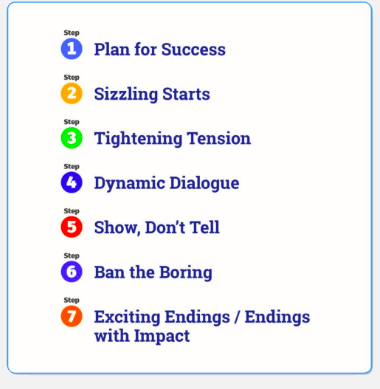
We want children to start their stories by grabbing their readers attention. She talked about this as being a sizzling start. This came from a writing process model they used. 

We looked at this picture then had to write our own start. 

Disasters has struck! I was all ready running late for work when I released that my hair drier was broken. Not broken in the normal way where it wouldn't work but in the way where it created a wind storm. 

"Sitting in my field all day is boring," Said Poppy. She was the only daisy in the field who had any clue about the world. Yes she knew that the daisy being called Poppy was silly but that just shows how clueless her parents were. 

"What are you?" asked the little girl as she pulled me from my home. I felt violated so my reply was short, "A fuzzle!" I yelled.  

After a hard day in the classroom what else am I meant to do. I had been working so hard on my diet but all the running, jumping and crawling of our maze had made me do it. 

Technology should add value to learning. 

This tool was not at all my favourite. It closes if you stop writing. 


This is a fun looking tool in which you can create fake text message conversations to show conversations between characters or to and author. Best for higher up the primary and secondary. 
This is a tool that gives you picture to match your picture. 

You can create a class with a topic pack for everyone to have a go with. You can create your own cartoon you and create a class photo. 

I have seen some amazing ThingLink. This is a great tool for creating amazing picture that share information. You can create links to more content from one image. 


This is a comic creator that allows you to create comic of all kinds. 

EdTech Auckland: Keynote Time to Wonder

Today is the first day of the Edtechteam Create summit in Auckland. We all packed into the hall at Aorere College.
Image result for edtechteam created summit auckland

First up in the Keynote presentation Time to Wonder from Lisa Highfill, is the co-author of the hyper-docs handbook.

Lisa is a year 5 teachers and educational coach. She is wanted to talk to us about learning. She said she has been watching kids with the eyes of a scientist learning what made the kids tick. Her science ideas came from her dad who was an inventor.

She talked about all the things her dad 'invented' and how all the things he came up with someone else had already invented. It was because this that she started collecting all her good ideas in note book then in a Google sheet that populated by texting them to herself.

There is a fear of putting good ideas out there. There may be no new ideas but the value of an idea is putting it out there and sharing it.

We watched this video and discussed what learning we saw....


Here is what we thought: 

We want all the children in our classroom to be rubber band babies and we want to be rubber band babies also. Learners who are excited, curious and explore new content and most of all create new content. 

Is the question we need to ask about content is "What do you wonder?" How do you get to the point when kids can wonder. We have to help children build knowledge that helps them to ask questions. 
For example provide a rich multimodal that makes kids dive into ideas and learn. This is the site Lisa share when she was learning about Avalanche.  

She talked about gifting children multimodal text sets to get children asking questions, wondering and move away from all asking for answers, because learning is so much more than that. 

A Question can take you anywhere:


All she has said links back to what we have been talking about for sometime in Maniakalani the idea of multimodal learning and getting kids thinking about content.

Often our kids ask closed questions where the answers don't build new knowledge, so it was important to get kids asking open questions that will get kids learning new things. We want learning to be dynamic and to empower children be learners and be excited. She explained the hyperdocs are live documents that are always changing.

We want children to have option when they create. I liked the way she had videos of how to use the different creative tools that encourage children to make choices and try knew things. She encouraged us to share all we create.

Let's get learners being, creative, excited, engaged, curious, passionate people!

Wednesday, 11 July 2018

GAFE-Closing Ignites Session

Kim Sutton-Good Questions
Kim started by talking about how she was not 100% sure on what she want to share. Then she had a discussion with Jesse and this lead to her topic. She talked about all the questions that she and many other debated at university.

She then said this does not add up to the the number of questions kids ask about 437 a day. Some questions by kids are pretty common "will you play with me?" but they can be crazy like "why is hate more important then love?"

Why do you ask these questions? "Because if I don't ask question, how will I know what to change in the world. "

Questions are probably more important today then answers

Ky Staal and Lara Ferri- young entrepreneur project
These students' took us back to year 10 in which they took two weeks to follow their passions. They had to employ the teachers and get them to help them. They had to make sure their project help their community and school. 

We watched a video that explained this and showed how students took on the leadership roles in these projects. 

They shared through a fair in their school hall explaining how their projects had an impact for them, others and the wider community. 

"In order to evolve other education system we must first involve the student" This quote stood out for me. 


Michael Davidson-Lego stories
Micheal talked about how one learner changed his perception of education. He talked about how the lego in his classroom allowed a learner with very little english told his stories.

He said "innovation is a state of mind". I am not sure I agree with this. I think yes you have to have a drive and a passion and a mindset but innovation needs to much more it needs partners, time, thought, challenge, risk.

How can you watch learners and notice what they are doing and allow them to build with it.

Jay Atwood- What Gran has to say
Jay grew up in a small town with a town moto of "Where tradition meets tomorrow."

-Know what is trending
His Gran, new what was happening.
  1. Know what is trending
  2. Share what you learn
  3. Everything is hard before it is easy.
It takes a teacher to make that link from hard to easy. The role of teacher are changing.
This image is what you get when you google teacher.

But that is not reality. Don’t say “it is easy” learning is messy but what if we can get kids from the point where it is hard to where it is easy.
4. Have fun with it.

Don’t be afraid to enjoy the challenges just because it is hard doesn’t mean you can’t enjoy it.


Tuesday, 10 July 2018

GAFE-Manaiakalani Google Class Onair

In this session Rebecca Spies talked about her experience as a Class OnAir teacher. I really loved the way she openly shared about this experience.

She explained that each lesson has:
-A video of the lesson
-Lesson Plan (this is an extended plan that has lots of detail to help teachers).
-Reflection
-Learner created content.

We watched a lovely video of the learners in her class exploring their five senses and looking at describing what they experienced using scientific language.

Class OnAir gives the kids a chance to get even more exposure and more comments which provide questions and prompts to think more.


These are the fantastic teachers who share their teaching through Class Onair

I really enjoyed this session because it gave me a change to really explore the Class OnAir videos with someone their who could explain and add to my experience. 

GAFE- Google Science Journal

Kim Sutton works for Google and works with many Educators to support them in their use of Google products. She is a teacher who has taught a range of year levels.

Todays session is on Google Science Journal. This App allows you to use a range of sensors on our phone or iPad to record experiences and understand, sound, light, distance etc.


You can use it to collect data and add notes. You can add sensors on to it you can code with it. On the Science journal you can get the code. 

This app is awesome. They are working on Google Drive integration for this awesome tool. However Kim was not sure of the timeline for this. 

There are lots of cool lessons that use the music videos from OKGO. These are are very cool and provide motivation and creative experiences for kids.

There are loads and loads of great ideas of how to use the science journal app for many different curriculum areas. You can find the resources and ideas here.

Thanks Kim I loved your session and can't wait to start using this App with my class. 

GAFE-Create A Formative Assessment System Empower by G Suite

John Meng- Works at Rooty Hill High School. He supports teachers to step up their practice. He also teaches Maths and Languages. He leads teams in these areas. 

This workshop looked at the pedagogy behind formative assessment. This will centre around his experiences.

We started by talking about our own experiences of formative assessment.
-Someone shared their use of Google forms as a way of doing formative assessment.
-Bump it up wall, students compare their work to the wall. They also get feedback throughout the process. This allowsto peer support a critique.
Image result for formative assessment

What is formative assessment: This is assessment that happens within the process of learning. 

One way of thinking about assessment is... When a chief tastes a soup, they can change it to salty, they can change it, That is formative. When a Chief serves the soup to the customer, That is summative


We see that feedback has a huge impact for learners. We need to identify the gap from what we know to what we ned to know.

However....

Feedback alone is not enough, it has to be coupled with motivation and we want this motivations to be internal. John suggested that Doug Fisher's model is a positive model for formative assessment.

Here is the video he shared
We learn language by producing language, if we are using academic language student's should be using this language as this is home we learn it. 

He talked a lot about the use of interaction on Google slides. Powtoon could be good for instruction and modelling.


GAFE Sydney-PBL in a Google World

In this session Kimberly Hall helped us to explore project based learning and different digital tools that could be used to help with different elements of the inquiry or project based learning. 

Developing the question 

The first tool we looked at was Answer Garden. This tool is ideal for seeing prior knowledge. It is good as it has a live nature kids can contribute multiple responses however you can only write the same thing once.
Kimberly talked about the the classroom mode being the best. Make sure you turn on the spam filter and you may want to change the settings to hidden. 

We all use Google search all the time. This site Google Inside Search When we search a person, place or thing a knowledge card comes up on the right hand side which provides details about it and related things which can extend understanding.

Padlet has some great updates that you may not be aware of, you can add images, videos, voices, memos. It is not as usable as you only get three boards.

Canva is something I have used as a professional to create infographics. It can also be used to make certificates etc. Another place for creating infographics is Piktochart.

Accessibility tools

Rewordify- You can put in a lump of text and it literally rewords it. Changing the language for kids who struggle to read at that level. You can get it to highlight parts of speech. You can get it to make activities that could provide some opportunities to dive into the language. 

DotEPub-This terms a webpage into an Ebook. 

Read&write-This tool is an equaliser for for kids. It has a tool bar that does text to speech, it highlights the sentence. You can highlight text and it will read that specific section. It has highlighting tool so kids can highlight key information that they identify in their research. It will create a Google doc with the things that are highlighted text and it links back to the source.   You can simplify the content. 

This is definitely a tool that I will be exploring some more in the future. 
Thanks Kimberly for sharing. I really enjoyed these tools and believe many can be used across the curriculum. 

Monday, 9 July 2018

GAFE Sydney-The Power of Possibility Part Two

Assessment with the growth mindset

We need to remember there are two types of assessment: 

Why:
Assessment FOR Learning- Here we can give feedback on the process and praise failure. 
&
Assessment OF Learning

We want to shift the focus from feedback for a grade to feedback to add to our learning and improve. 

Who:
The power of multiple people building on their ideas and providing feedback is amazing. The way kids give feedback is different from the way we do and can be very important for our learners. 

What:
You can used revision history and get students to name their process. 

When and where:
You could use growth language messages in our Google forms confirmation messages. 

If we want to create a growth mindset in your classroom, we need to make it our culture. 

When we are giving feedback we often use statements, can we flip these and use questions that make our students think. 

What are we praising?
-Effort 
-Strategy 
-Result (Growth) 

The problem is we have all of these fraises that actually cultivate a fixed mindset. 

This year has all been about language for me. We as a school are focusing on what language we use and the way we teach language. The words that we use in our classroom make the culture of the classroom. 

Maybe the language we start with is the word YET. 


We need to be building the language of positivity and growth in our classrooms. 

We are teachers are the chief of mindset in our classroom. 


GAFE Sydney-The Power of Possibility Part One

I am excited to be at another one of Lindsay Wesner wonderful sessions. I really enjoyed her session and Keynote at the Auckland Summit. I love her positive attitude and think it is just want I need to help get rid of my half way through the year vibe. 

So what is growth mindset: As a group we created a share understanding of what growth mindset is. 

Here is Lindsays redesigned graphic that shows these ideas beautifully:
We need to remember the power of "yet". I have not got this 'YET!'

As teachers we all design tasks. Is there something we can do to make sure the task itself is cultivating growth mindset. We talked about this and played Bingo. Here is how we went:


How do we provide multiple choices within our learning tasks. How do we provide scaffolding in a discreet why.  

We can create a multiple pathway learning journey that supports students learning. This is done using move to section based on answer. We can use choice boards to allow students to demonstrate their understanding in non-traditional ways. 

When we see the process we see the mindset. 


GAFE Sydney-Capes Not Required

I am very excited to by at the GAFE conference in Sydney. The room is buzzing as we wait for the opening Keynote. All the MIT teachers are double checking resources and excite to share their experiences with a whole new Audience. 

Our opening Keynote speaker is Jesse Lubinsky he comes to us today from New Zealand, America were he is an innovator and technology leader.

Jesse talked about how he spent his childhood growing up in Brooklyn, in an apartment and Wednesday is new comic book day. He talk about how Superheroes are relatable for children and adults. He believes that every kids is a superhero but they don't have capes. Often as we go into teaching we think about this saying:

But what if your role as teacher is not to be the hero but to bring out the hero in our learners.


So what is our role in the heroes story? We would like to say that we are the mentor but sometimes the system or us can but barriers in the way for our heroes (students) that make them feel incapable.

We should consider the habits of mind.

What can we do as educators to bring out the hero in our kids:

Encourage their passions
One students passions was encourage was Jordan, who is a foodie and she has her own food blog. Jordan's lunchbox. What gave her this change is the support she got from her teacher and many people in her school who encouraged her.

Provide Opportunities
Students can be very passionate but this does not get fostered at school and this creates a disconnect for learners and as a result they don't feel that school supports them. 

One way Jesse suggested we do this could be through 20% time or Genius Hour. 

What if? 
-What if we are missing something? What if we are not listening enough to the people who this impacts most the kids. Jesse talked about how they change their school innovation fund so that kids could directly apply for funding for projects that will support their local community. 

At lot of the projects were around supporting younger students in communities. 

Celebrate their Scars 
Daniel Kish is blind and yes he found that hard but he way lucky because he was supported people didn't over over protect him. He used this freed to learn to echolocate. Now he teaches over people how to see without seeing just like him. 

There can be enjoy in failure. The things we hold the most dear are the things we struggle to get over and over until we finally get it. This is the same for our kids.  

Honour Individuality 
All of our students have challenges. Some of these challenges are physical but others are on the inside. Jordan Reeves age 10 has only one arm. Her is her story. Hilde is a reporter, she has her own news site. She covers things in her life. She has parents who are journalist. At 9 years of age there was a murder in her block. That wasn't received well by all. Here is her news site. To Honour their individuality we must know our learners. 

So is it true what Syndrom said "When everyone is super, no one is" No I don't think so we can all be super because with great power comes great possibility

Thursday, 3 May 2018

GAFE Making a Classroom Site

Hi all,

here is the presentation Danni Stone and I created for the GAFE Summit in Auckland this year. Sorry for the delay in sharing but I wanted to blog it with the video I promised at the session explaining how to make a timetable for your site.


I hope that these ideas and the video are helpful to all on a journey to creating a Google site for their Classroom.


Here is a video that will help you if you are creating a timetable for your classroom site. 


Tuesday, 17 April 2018

GAFE-Ignite Session

The Auckland Summit finished with four wonderful people they each shared a five minute presentation to inspire and provoke.

Dorothy Burt-Creativity Empowers Learning
We are entering an interesting time in education in New Zealand. Our government is throwing some things in the bin with nation standards and charter schools being the big ones. Once again we are reviewing education and exploring equity with the focus again being on access to learning for all.

Before you get to excited we should look back at the education of our past by Educators such as Elwyn Richardson. We can't just plan for our learners mind....Our young people learn through creating and doing. It can get noisy and messy but that is learning. Being creative pushes you beyond your comfort zone. So plan for creativity.

You can be part of the conversation about what tomorrows school will look like in our country, bring your voice to to the table for our kids.

Anthony Speranza-Hope, anthsperanza.com/disruptedu
Anthony has sought to give hope to others that positive change in education is happening. When we talk about what a good learner is teacher think one way but perhaps their actions say something different. You have heard it before our kids think they need to "listen, sit, behaviour'. Are we practicing and are the children learning what we believe and value.

Why do children in our schools want to "check out" and do youtube. We need to start unpacking the why, do they want to check out.

What is the learning we want for our learners:


  • Motivation
  • Content 
  • Skills

Here it goes again the theme of this GAFE. We Need To Take Risks!
This book is a adult picture book on leadership. I think I will be checking it out.

When will the extraordinary become ordinary? 

Dorothy Apelu-Supporting students to become better with writing using blogs.
Dorothy shared how in our cluster we have one uniting factor across our cluster. As her year nines arrived they talked about their learning journey and how they had be writing. Students were worried about housing. They all took on projects around the house and and share these on their blogs and at a cluster wide presentation.

Dorothy talked about connecting what had happened in year 8 and built on these strategies. They used quadblogging  to build their writing and connected this to Solo and the Tamaki way of learning. By connecting with a local MP students saw their voices creating change.

So CONNECT, with where your students are coming from, connect with their blogs and their past to help accelerate learning for their future!

Stuart Kelly-In the classroom, I am...

  • Aptitude
  • Attitude 
  • Altitude
Stuart asked us to consider who we are in the classroom. We are a teacher, student, a learner. I the classroom I am me. In the classroom I am We. 


Session 6: Digital Storytelling but How?

Adobe spark is a great way of making videos. We started the session by exploring it. It does have apps for Ipads.

Lindsay Wesner Blog

What makes a good story? What do you think?
This is what we came up with:
-Structure
-Emotion
-Relatable
-Characters you connect with
-Humour

Structure is one of the thing that is kind of challenging. Have you heard of the Story Spine:


Have you ever heard of a six word story. Six words can break you hard, make you laugh, make you cry or put a smile on your face. But six words can tell a story. This could be a great idea for kids who struggle to write long stories.

Here is my six word story. Note this is a story I made about my life. Not for the kids. 


Session 5: infographics for visualization and data

Infographics for visualization and data-Patrick Green

Data is powerful and provides use with lot of information that we can draw knowledge from. This wonderful video explains some powerful ways for kids to find the story in the data. 
By creating visual students are learning to be more critical of the visuals they are exposed to through advertising. 


Data visualisation is different from an infographic because it does not have a story. We often give students tasks but don't put them into the role of the designer. I know that sometimes I don't give enough choice in the design process. 

One of the great things about google draw is that you can put resources in the margins and these will not show in the finished product. 
  • Zoom -  highlight the area specific area that you want to zoom to.  
  • Fronts mean something-They point our brains in a directions, culture also plays into how we see fonts. The design rule, Two fonts. Heading font and script font.  
  • Colour-If you don't know what colours go together don't guess. Use the experts who put colour groups online. You might also want to try this colour picker. 


GAFE Keynote Day 2: Once upon our time Part 2

Lindsey said when she first heard about computational thinking and coding, she thought you do that I will do my thing until she saw this.

I think you should see it too.


This is why coding is important. It is helping people to solve problems in their way. They hold power and can make real difference in their lives and the lives of others. It starts with just one step.

It is not about the language of coding it is about solve a problem, about changing their world. 

What if I ask my learners to solve a problem that really bugged them. Work towards solving it or even solving it.

What Lindsey did was she got some colleagues together and did some cross-curriculum learning. Being at the point of change, at conflict and thinking, What will this look like? There are barriers like in any conflicts.

Some of these barriers are:

  • Time
You will never regret investing time in things that really matter. When you see that lightbulb moment for that learner who has not had a lightbulb moment in years. We also need to think about what teacher are doing that the learners should be doing. 
  • Curriculum
We often think "I have covered that" but did your learners engage with it. 

  • Fear
The other barriers can all be brought back to fear. Fear of what others think, Fear of change. But you can strap on your shark fin and move towards the fear.
 

The cross curriculum unit was based on the book the hunger games. They had one big question in four learning areas:

How can we stop South Africa from becoming like Panam or Nazi Germany?

Lindsey ended with this statement and it stood out to me. Berlin does not choose to hid their history, their pain, their war. They know it is part of their process. 

If we take our: 
Vision for the education we want to achieve. What does it look like when we give out learners storie and the space to solve these problem. 
You are not alone. We have EACH OTHER.  You are not learning alone. So connect, make friends and learn from them. 
We have our stories. My story can add value to who we are as educators and who our learners are. 

Every Story Matters! Your Story Matters!