Showing posts with label CReflect. Show all posts

Tuesday, 18 October 2022

Celebrating Academic Shift

 This year has been the first in a while with consistent time at school for some children. This has made the opportunity of accelerated shift. 

As part of my Class Onair Application for 2023 I have been reflecting on my academic achievement data from term 1 to end of term 2 for maths and writing and from term 1- term 3 in reading. 

As a teacher I have done a number of inquires into reading in the past and feel quite confident teaching reading. I have found that I can make accelerated shift for a number of children in my literacy class. 

Across the class there is only one learner who has not made 1 year or more of shift in the last 3 terms. 


However maths and writing a yet to show the same shift after two terms. 


I know that for writing and maths I need to keep working on my own practice and developing new strategies for supporting and growing learners knowledge in maths and writing. 

I am interested to see if this shift changes at the end of the year as terms 3 and hopeful term 4 are more stable in attendance than terms 1 and 2 were with isolating children and families. 


Friday, 16 September 2022

Creativity, Collaboration and Music

A huge part of my inquiry this year has shifted away from the elements of mathematics to the elements of collaboration and creativity. 

My hope is that by providing these activities for collaboration and creativity the children will be able to apply this learning across the curriculum. 

This lesson focused on building these skills and it was incredibly positive the way in which my class engaged with each others. 

Through this activity the children worked on expressing the values of our class as they see them in a song. 


Wednesday, 25 May 2022

Gathering information

Mathematics is a huge topic and covers a wide range of knowledge. To help me understand where the learners are at in some of this knowledge I created 3 levelled Explain Everything activities. 

These Explain Everything activities asked learners to respond to a range of voice prompts. 

These were drawn from Maths progressions I located when searching from another school. See here. 


From these assessment I noticed that some learners:
-Struggled with Teen and Ty numbers 
-Find remembering specific facts hard
-Struggle counting backwards 
-Struggled with fractions  
-Struggled to motivate themselves when working on a longer piece of maths. 

Wednesday, 24 November 2021

Burst and bubbles


 This year my inquiry focus was initially on, How will using a variety of high interest texts and providing open tasks impact students critical thinking?  

This was fulled by a few areas of student learning I was worried about. Firstly in my class of 27 learner at the start of 2021 only one was reading at their chronological age, of those not reading at their chronological age all were at least a year behind with many being two years or more behind their age. 

This raised concerns for me but also prompted the question why? What is holding them back. 

I identified critical thinking as a focus when I noticed children across the class were not thinking about what they read, not asking questions about new words or ideas even though they expressed an enjoyment of reading. While critical thinking stayed as a focus vocabulary also became and area of need. 

To build a rich picture of these areas of need and strength each learner had I looked at a range fo data. 
-Running records
-PAT reading
-Star Reading
-Student voice interviews
-Vocabulary based Arbs task
-Picture description

This highlighted again challenges around vocabulary with students expressing frustration over not understanding what words meant. 

After collecting all this data I asked so what am I doing? 
I have focused my inquires on reading for some time now but have continued to take a very differentiated  approach to reading task and with groups not working on similar text and ideas. After doing some wide reading and connecting with the idea of wide a deep for juniors I decided to focus more on whole class teams. Using the same open task for all texts with the hope this would allow for more collaboration across reading groups and more exposure to vocabulary on a theme. 

Changing the activities was an easy but huge change that shifted the responsibility from me to the learners to do most of the thinking.

Overall I would rate the change in learning as huge, for many of the learners in my class reading as not come easily. Given term 3 shift data I feel confident that many learners have made great progress in reading. However I do state that this may not have all been from this intervention as many attended Quick 60 reading also. 

For me the most important learning from this inquiry was that making more work for ourselves and less work for the children doesn't help anyone. Children need to be the ones thinking, creating and doing for true critical learning to happen. I also want to note that never in this inquiry did the children say they disliked reading even given it was such a huge challenge for most of them. Their positivity I believe played a huge role. 

I also want to note that this reflection does not take into account the impacts of lockdown as I would have had to talk for way longer than 3mins to include that information. Please see my blog for more about that. 

Thursday, 11 November 2021

Lockdown Reading reflections

Today we met as a home class to talk about what it has been like learning from the distance. I asked the children to think about how many books they had been reading. 

After that the children and I talked about what things they had read. 

We discussed What we like a dislike about reading during lockdown. 


Finally I asked the children to put themselves on a scale to show how they think their reading is progressing during lockdown. 


This information comes from a range of children some in and some not in my inquiry group. The results of this survey are mixed. some children feeling they are reading lots and progressing lot while others don't this shows the diversity experiences during lockdown. What this does not account for are the children who have not had the ability or opportunity to connect digitally. 


Wednesday, 10 November 2021

Reading shift 2021


This data shows that during time at school many of the Room 19 learner not just those in my inquiry groups were making considerable shift in reading. I am aware that for some of these learner there was an additional intervention of Quick 60 reading. However learners who both did and didn't have this intervention have both made 2 years progress and 1.5 years progress which suggests that the classroom intervention played a role in this move in reading achievement. 
 

Monday, 1 November 2021

Reading during Lockdown

During Lockdown we took a team approach to distance learning. In order to make sure all learners had learning at/near their level we organised all five year 3/4 classes across our team into 3 groups of each subjects. 

This is our organisation for reading:


From Monday- Thursday each group has a reading task connected to one more more texts at their level. Then once a week they meet with a teacher to discuss one of these tasks and focus on specific needs of the group. During distance learning I took the middle green group. This group would have had a few of my inquiry learners however many of the learners from my class who would have been in this group did not engage in distance learning. This meant many of my inquiry group learners were in the higher turquoise Group working with Angela Moala. This is an example of weekly reading planning. This was done by our wonderful students teachers

This Class Onair Lesson provides an example of a reading lesson with my group who are working at a reading age of 7-8 years. 


Monday, 2 August 2021

Inquiry Mid Year Update

My teaching as inquiry this year has focused on accelerating achievement in reading. Specifically acquisition of new vocabulary and critical thinking. 

At the end of term 2 we conducted mid year testing to support the formation of our overall teacher judgement for report writing. 

One measure of data which I collected was running records to see what shift had occurred in reading ability. I used the PM Kit to conduct my running records as this provided a standardised measure that looked at decoding, comprehension and some vocabulary. 

Here is the data I gain from this assessment:


What does this show: First of all I must note that children with a * by their name have had additional support through the Quick 60 Reading Program. This is a well rounded support program aiming to fill gaps for the learners. Having this additional support means that for these learners it is harder to say which program Quick 60 or the Intervention have had the most impact. While students in Quick 60 have had additional reading their results are not all that different to those who were not in Quick 60 reading. 

There are 15 children in the inquiry group. All have made expected progress for 2 terms at school 0.5y. However for 3 children they have only made expected progress. GM3 is new so I have no historical data to look at to see if this GM only made 0.6 progress in year 2 and 0 progress in year  3. While GL made 0.3 progress in year 2 and 0.1 progress in year 3. For both these learners 0.5 progress in 2 terms is significant when compared to their historical progress. 


Seven children have made 1 years progress so far this year. This is half a years acceleration so far this year. So long as they continue to make progress I predict they will have accelerated shift this year. 

Four children have already had 1.5 years progress this year. That is accelerated shift.  My plan for these learners is to gain at least another 0.5-1 shift as they still have a way to go until they reach their chronological age. 

One student has made 2 years progress. This student has gain a lot of confidence as a reader. She still has 1 year to go to be working at an end of year 4 level and this is our goal for the end of the year. 


Tuesday, 20 April 2021

Tools the Measure

 Describe the tools/measures/approaches you plan to use to get a more detailed and accurate profile of students’ learning in relation to that challenge. Justify why you chose these approaches and tools.

The purpose of inquiry is to understand an issue in student learning and take considered and active steps to address the issue through intervention. 

As my focus in an issue on student learning in reading, I plan to use a range of reading assessments to understand the issues for student learning. 

First I will do a running record on all children in my target group. I will do this to get more qualitative data about their reading ability and comprehension. From the running records I will look closely at what is happening in the way of decoding, and comprehension. 

Second, I will look at standardised test data from STAR and PAT reading. I will look at this in comparison to their running record and note similarities and differences in achievement from one test to the next. I will also look to see if there are patterns within the group or outliers that suggest other areas of need. 

Third I will collect student voice about reading. Focusing on what they find challenging and what they enjoy about reading. This will provide some additional data to build my profile. 

Fourth: I will video my reading groups and note what I am seeing in the way or reading behaviours and  discussion behaviours. This will focus purely on what the students are doing. 

Finally: I will look back at reflection notes and note any interesting discovers I have had as a teacher this far in our learning. 


Monday, 12 October 2020

Words are a huge part of reading

 This year my inquiry focus has been on reading and trying to accurate reading learning for children who we reading below their chronological age. 

I have made a number of changes in my teaching ready for term 4 building in the changes I made earlier in the year. 

Towards the end of term 3 I finally had a chance to test the children 1-1 on their sight words. I expected this to be a significant challenge for the learners in my target group but was surprised that for the most part sight word knowledge sat at normal level. They knew sight words up to their current reading level. There were a view gaps that I will not more specifically in a future post. 

Given this new information I started asking if its not sight words which I still could be as they need the next set to progress forwards what is it? 

We have continued to us the Dr Gwyneth Phillips work around picking up the pace in literacy and I do believe that systematic use of these has supported reading however I still asked what am I missing. 

This is when I started thinking more about Phonics. We do phonics in context in our guided reading programs but that doesn't see to be enough. I started looking at the errors children reading between level 3 and 20 were making and so much of it came down to phonological knowledge. For example children were saying single letter sounds not blends, or mixing up vowels in the middle of words. 

I have taught for almost 5 years now and have not at this stage implemented a systematic phonics program. 

So given what I have found out what next:

Every day in Room 21 we do hand writing in the morning. Now I am going to use the more systematic phonics approach to this. I am drawing on the resources from the site progressive phonics who provide a step by step phonics program for free. I choose this as it allowed me to start at the Intermediate level in which they have a strong focus on blends and use poems, flash cards, games and more to learn blends and words in order. 


I still have a lot to do and the year is drawing to a close. perhaps phonics will be the missing piece that helps these kids to start to fly in their reading. I sure hope it is. 

I have also started to provide even more milage. Milage is something I know works to build fluency, word knowledge and over all reading ability. In order to do this each day I have had a buddy reading book along side the teacher supported book. 


My hope is that this will combat some of the effects of the two lockdowns. 

Tuesday, 25 August 2020

Collecting data to show change

Describe how you will collect information about the implementation of your changed practices/intervention (so it is clear what you doing differently) 

Identify informal & formal ways you are monitoring the effects of your changed practices/intervention on learner outcomes.  Explain the reflections and tweaks you are making along the way (Don’t wait to the end of your inquiry cycle and find it didn’t work)

As a teacher and an inquirer I always have a plan. However I often find little goes the way I have planned no matter how hard I try. This year so far has been a model of that even though I have tried so hard not to let it be. 

With the World wide Covid 19 Pandemic and Alert levels 3 and 4 making things more challenging I have found it especially hard to stick to my plan and collect data about the small and large changes I have made to my practice. 

This blog post however reflects back on what tangible changes have been made so far and what I plan to do next as I look into reading and accelerating it.  

So what was/is my plan for how I will collect data and what has and hasn't gone to plan so far. 

My plan this year revolved around a number of check points. 

1: Every 2 weeks read 1-1 with students in my target group making  detailed notes about what they are and are not doing to develop specific measurable goals for teaching next steps. 

2: Collect student voice 3 times a term starting in term 3 and look at what they stay about students reading a long side teacher notes. 

3: Conduct a high frequency word reading test twice a term and see what changes have occur in knowledge of students. 

4: Video record teaching every 3 weeks to see what has changed in teacher and student actions. 

5: Video student independent work to see what has changed in activities and learners interaction with these. 

6: PM kit running records and notes on these as required to move children forward. 


Describe how you will keep a record of each of the above in a manageable way (‘cos you won’t otherwise remember all your many micro-decisions and why you made them). 

Data will be record and stored my my inquiry data spreadsheet and shared as it is collected here on my blog. Each piece of data will be display different depending on what it is. 

Survey data will be display as seen in this post.

Student reading notes like these. 

Student running record data like this. 

Videos of reading will be edited and reflected on student needs and growth and teacher strategies used. And is likely to be displayed like this. 

High frequency word test will be displayed as a table similar to Reading notes. 

So what has a relativity been so far. 

Thursday, 21 November 2019

Bursts and Bubble Reflecting on my inquiry

I am excited to share my inquiry in 3 minutes at our Bursts and Bubbles. Thought, Idea, Innovation, Imagination, Inspiration


The catalytic aspect of student learning for my inquiry was gifting vocabulary across my literacy program in an effort to increase overall literacy achievement for my learners.


I identified this as my focus when I noticed that while the cluster wide and school wide data showed a need to focus on improving reading many of the learner in my learning space were struggling writer coming into year 3 writing at a 1B level.


The sources of evidence and data I used were from both the areas of interest for me and my learners. I used Star Reading data, Running records, e-asstle writing data, samples of writing taken from the learners writing books as well as my own observational notes of students reading and writing behaviours.

The main patterns of student learning I identified in the profiling phase were that learners were writing very short stories that were lacking in the areas of ideas and organisation. They also struggled with decoding in reading with all 11 learners in my target groups reading at a year 1 level. While they were eager learners they often struggled to get started and to attempt unknown words in both reading and writing.


My profiling of my own teaching looking back at previous years data showed that I made  good progress in reading using my current approach. I noted however that when teaching writing I was not gifting the amount of language I suspected was enough to support vocabulary acquisition and retention in reading or writing.  This led me to think carefully about the gifting process in my teaching when the introduction of texts for reading, engaging learners in a writing experience and throughout the writing process.


The changes I made in my teaching were carefully selecting language when introducing learners to their texts in reading. I also worked on intentionally gifting language throughout the writing process and making this rewindable the use of audio clips in the explain thing activities. During my implementation I notice that writing was still short and that sight word writing was holding learners back. This is when I worked on building automaticity of sight words in context.


The literature/expertise that mostly helped me decide what changes to make were looking back at the inquiries in this area conducted by others in the past. I also drew on the professional learning from Jannie Van Hees and took the ideas she shared in CoL meeting and team meeting into my practice.


Overall I would rate the changes in student learning as interesting The evidence for this is that student achievement in reading was great with all but 2 learners making over a years progress and 2 learners making over 2 years progress. This is significant for these learners when compared their progress in previous year. While learners writing length increase this did not translate into shifts in writing level on the e-asttle test. I wonder if more regularity in implementation of approach would change the impact. 

Saturday, 16 November 2019

Reflect on your professional learning

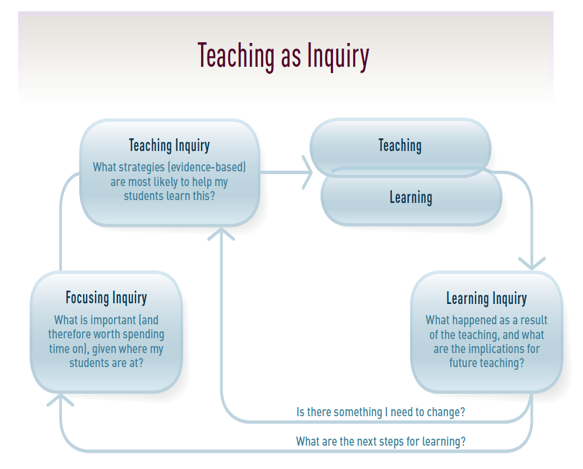
Image result for teaching as inquiry
4. Write a reflection on your own professional learning through this inquiry cycle.

This inquiry has been a big cycle of learning for me. I have found myself asking many question like:
-Why is my reading shifting at a rate much faster then my writing?
-Why has my change practice not had the impact I had hope?
-How much time did I really spend on my changed practice and was it enough?

This inquiry as made me go back and think carefully about the practice that I may have lost over the years. I has also made me reflect on the most important parts of the writing and reading cycles.

To do this I have looked at the effective literacy practice books year 1-4. This lead me to change my practice and work more on who was writing. This was a key idea of Dr Jannie van Hees when she talked to us about the apprenticeship also.

I have learned a lot about what doesn't work also. The main thing I have found is that too much change too fast does not affect the change. In the future I want to be careful about all the elements I change and maintain the change over a longer period of time with more careful and close reflection on each individual element.

I also reflected that my classroom trend is different from that of the cluster data. I wondered if perhaps I need to draw on more experts within the cluster to change my practice. Perhaps more data gathering would be of benefit. I wonder how to best locate teacher in year 1-3 making significant shift in writing.

This inquiry has lead be to believe I still have a lot of work to do in my practice and as I reflect and discuss this challenge with many of my colleagues.

Friday, 15 November 2019

Overall evaluation of your intervention

3. Write an overall evaluation of your intervention in terms of the causal chain you had theorised. i.e. To what extent was the intervention successful in changing factors such as teaching? To what extent were those changes in teaching effective in changing patterns of student learning?

Early in my inquiry I identified two key changes and theorised that impact of these changes see this blog post.

While I made these changes I found that due to a number of factors including, time in the classroom, changes of classroom teachers and inconsistency in my ability to regularly deliver these changed practices caused a lack of repetition in my approach.  From my earlier inquiries including my 2016-2017 inquiry into reading fluency. I know that consistency and repetition of a teaching approach are important in creating learner growth.

While I wouldn't say my intervention failed I believe I did not give it a change to really succeed. While some of the factors that prevented this were beyond my control such as my co-teacher leaving, many were factors I should have had more control over. In future I will implement my intervention earlier and monitor myself better. For example making notes of how regularly I implemented each element and giving each element more time to work.


Thursday, 14 November 2019

The Key changes I have made in my inquiry

1. Summarise evidence about key changes in teaching and other factors that influence student learning.

At the beginning of the year it was clear that there was a huge need for my learners in writing and reading. See this blog post.

This need lead me to look at my practice and think about what I was doing and what changes needed to be made to address the clear need in the data. As a result I tried a number of different practice aimed at building vocabulary in literacy and building writing capacity and skill.

As a result I tried a number of different things. Looking back perhaps to many different things and nothing for quite long enough but my practice definitely changed.

Each term I made a change based on reflections on student engagement, data and need.


Early in the year, Chrissy and I worked together with a focus on building oral language and written language through connection of reading and writing with a strong focus on oral record. We did this by focusing on an element of text, setting, character and plot for 1-2 week blocks and this being the main focus of all reading and writing with an aim of building descriptive language around each element.


This is an example of the children's created character and shares the same feature as the reading activity. 


Here are some example of what this looked like. We found that well the language used within their activities was similar to that they already had and that this was not maximising gifted language the way we had hope. Gifted language was used more in writing however.


Also in Term 2 (See blog post) I looked at how I could gift more language using the digital technologies. I found myself over gifting which and the learners were so overwhelmed. I learned from this experience.

In Term 3 we had some wonderful team professional development with Dr Jannie van Hees this made me think about the things that are missing in my program. What am I doing about sight words. I started using this approach and the kids said "I like writing the little word." "I write more this time."

I also filmed this lesson for my Manaiakalani Google Class Onair.

Thursday, 17 October 2019

It's time to evaluate, What do I do?

Today we are talking about the evaluation process of our inquiry and the intervention we have put in place. Thanks to Woolf Fisher for sharing these key ideas with us and I hope they will help you also.
                                        
In order to do this we need to look back at the data we collected before the invention. Having robust data before implementing and intervention.

By looking at this data you can identify change or shift of the learners. Then make a link to the changes you made in your teaching. This however is not enough, we need to make comparisons with the norm or other data sets (this could be another class, last years year 3, children not in the inquiry group). Children get better under normal teaching conditions so comparing to other data sets can show significant shift.


This table shows a way of showing pre and post data. This could be done for both data sets and allow for great comparison. 

When looking at number you can easily compare these however not all evidence is data. 

When looking at qualitative data you still need to provide rich data with lots of detail. 

talk about the what in detail, how do you know they were disengaged, struggled to spell etc. Why is it the biggest success. 


Tuesday, 4 December 2018

End of year reflections

This year has been huge for me. I have learnt a lot about myself as a teacher and a co-teacher. I have found that working together being on the same page and investigating the same issues in teaching and learning. I have found that especially in reading we have made a lot of shift even though this is not the area of our focussing inquiry. 

Inquiry 

This year has been a huge year of learning for me in terms of DMiC maths and reflecting back the critical successes we have had in this area are. Children all have strong shared values around what maths looks like in our classroom. This is due to the early implementation of our class maths norms and the constant talk about them. The kids are excited to do maths, they want to talk to their friends about what they are learning and they want the problems to be hard. They don’t get upset when they do get the whole thing first time they listen and then try again. I skill have much to learn in DMiC but I feel one success is how well Chrissy and I have worked together to build our knowledge and help each other in this area well skill maintaining our own teacher voice and style. 

Other 

Reading

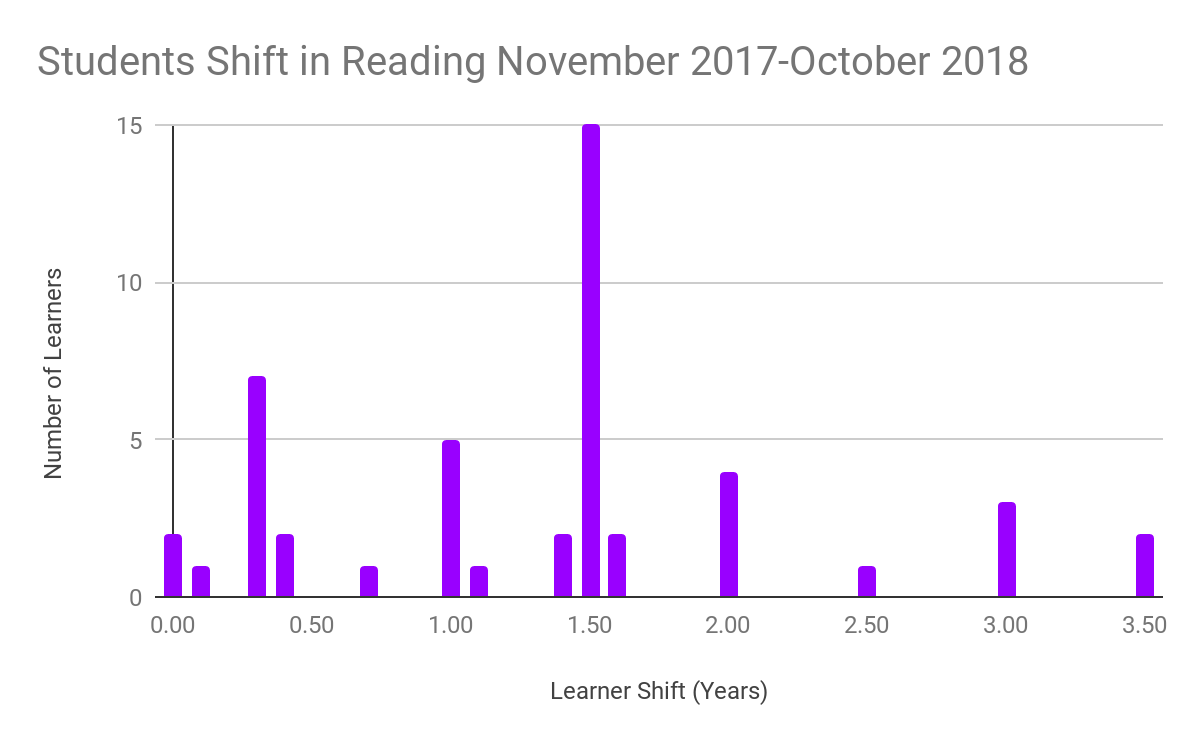
We are really proud of the reading shift we have seen this year. We have had most of our learners make over a years shift with half of our learners making 1.5 years or over. We feel this is due in part to our routines that encourage millage, we get kids to read every morning and take books home every night. We also believe that the discussions and creative tasks have had an impact here. Our class love reading and that love of reading is evident in their shift. 

Chart


Writing

This week we have been doing practice test condition writing for our test on Thursday. We have been talking to each child about their goals. It is so wonderful to look back at their writing at the beginning of the year and now and see so much more writing, more structure and more description, My biggest success her though are two boys, At the beginning of the year writing time would come and they would chuck their pencils and find a corner to hide or cry. Now they sit for 40 mins with everyone else and write. They write 4 sentences with no tears they just try and that is the kind of shift your feel as a teacher a shift from fear to happiness and pride. 

Friday, 2 November 2018

My Inquiry Presentation Manaiakalani & Outreach Principals Wananga 2018


This year I had the privilege of being part of the MIT program and as part of this we shared our inquiry impact story with the Principles and School leader from the Manaiakalani and Outreach Cluster at the 2018 Wananga on the 1st of November. 


What happened for the learners

As a result of my inquiry was that learners became more confident in their use of mathematical language and this meant they were able to model, explain and use this language when solving problems and discussing mathematical ideas.

For one of my target learners this supported great shift in her mathematical ability and with her making two years progress in one year. Another learner in my inquiry group made 1.5 years progress. However this was not the case for all learners and as such I wondered if students interaction in the intervention played a larger role than I had anticipated.

What evidence do I have for this
A clear picture of the language development was painted by the vocabulary survey which was taken in terms 1 and 4 this showed that students understanding and ability to use this small range of vocabulary had greatly improved.

I also used Gloss Data to look at mathematical strategies and explanation. This as we have discussed a lot this year may not be the ideal for of assessment for the DMiC method however it did how that students how activity engaged in the intervention could understand the language and this supported them to solve the problems.

What did I do to make this happen?
This inquiry has been a huge area of growth for me as a teacher. I have step out of my comfort zone and tried many new things. This started with a focus on coding which quickly shifted toi using a range of approaches to support language development and discussion in mathematics.
-Developing a shared language and classroom culture.
-Write Questions rich in language and open for discussion
-Integrating language into coding tasks
-Providing language and discussion prompts

Wonderings about what next
As we move toward to end of 2018 and into 2019 I want to continue this approach and see if with learners becoming more familiar with DMiC in can have a bigger impact. I also wonder if the key principles of this approach the rewindable videos, prompts for discussion can be adjusted and applied to literacy as an aid to goal setting and discussion of goals in reading and writing. I am interested in this because of the work that Danni Stone has been doing this year with her year 7 and 8 students in the connection between reading and writing and the language that we can draw from reading to writing. It also came up at MIT that the prompts and videos could be integrated across the curriculum building more familiarity and cross curriculum integration.  

Tuesday, 16 October 2018

Getting Feedback

Throughout term 3 I have been working on creating a site and physical prompts that will support students to have in depth conversations in maths.

This site draws on students created videos as models for vocabulary and language scaffolds.


As I feel this site, the prompts and QR codes are working well for me and my class I wanted to share the resource and see what other teachers thought about its potential use in their classrooms. 

Here are the questions I asked and some of the feedback I have received so far. 

What did you find useful on this site?

The layout was clear and things were easy to find and seem easy to use.

I liked the layout of the QR code links - vocabulary item with a explanatory video featuring 'real' kids using the target word - great to see the vocabulary item in action with real kids.

I loved exploring this site. It left me with a thirst for wanting more. I loved the connections students can make through the use of QR codes to link a rewindable video of peers explaining their maths thinking. I actually found your ideas regarding coding extremely helpful as that is what I want to be exploring next Term. Your videos to explain activity to students is just what I needed as a teacher.... and is exactly what other teachers that are new to coding will need. I thought the information on each page was simple and easy to read.

What else would you like to see on this site?

More videos showing the kids using the QR codes.

Videos of what the QR codes link to. I would have loved to see these videos on this page. A short description of the DIMC theory about the benefits/power of students explaining their thinking (the why behind what you are doing).

Two out of three people who have given feedback so far said they would use the site. The other stated that she felt the content was to young for her year 7 & 8 class.

If yes how do you see it being used?

I would love to use the student prompt videos especially when introducing them to my groups next year.

I would love to try using this with my students next term, using Tamaki student videos. I think this is a great way to consolidate their understanding. I will also use this site to explore coding with my students, something I have wanted to do for sometime. Love these videos.

Any additional ideas or feedback

I would like to adapt the idea and use QR codes within Literacy to help build students vocabulary knowledge/retention/understanding.

Wow you are an inspiration! Love what you are doing at Point England. Your passion shines through in your site. Keep on sharing!

Thank you very much to the kind people who have given feedback so far. I hope to add a section on the site with more specific detail about the DMiC approach to Mathematics. I would also love to start working with other teachers to build up the content on the site and will be contacting some of the teachers who gave feedback to see if this is of interest to them.

I would love any additional feedback. So please feel free to check out and potentially use this site in your classroom. If you do I would really appreciate your feedback which can be given through this form.  


Tuesday, 11 September 2018

DMiC Professional learning

Social and Academic Status

Updated 12 April 2019

How does status change in our classroom. When do children hold academic status. Children who have a range of language stills seem to have more status to the other kids. Status is given for many reasons and this can impact the way that children interact. Can we plan our lessons to change the status for kids? How can we talk as teacher to evaluate or change the status? 

How does this affect behaviour? 
-Children will often raise to the belief of others. If one thinks I can do it then why should I. 
-If children believe that someone else holds all the power they may choose not to share. 

What we believe about our academic abilities and those of others is often form my our perceptions rather than reality. 

What we value and push for in mathematics will be reflected in the way the children engage in maths.

What do I think the kids think being smart in maths look like:
-Sharing their ideas
-Explaining their thinking

I want to support students to think about:
-Never giving up
-Challenging each others thinking

We read an article by Jo Boaler. This article talked about the different elements of maths. 

Multidimensional Classrooms
This talked about elements of a multidimensional class. It talked about adapting the problems so they are group worthy. Every child has something to add. We can get students to share a small part and this can add status and support the whole groups thinking.
In the classroom this looks like an expectation that everyone can participate. The problem is open to multiple strategies and potentially answers. Children learn that there is no correct way of doing it, they can all achieve. 

Assigning Competence
This is when the teacher actively raises the status of the students by praise the Mathematical thinking and sharing. This can be done to provoke the class to think about an idea but also build students confidence, status and increases the visibility of the students ideas which could be missed if the teacher did not actively engage and support that student by raising the status of their idea. As a teacher it is important to be specific about what you are praising as this make sure that students know it is not empty praise.
It is about how we know our children and what praise works best for them to assign competence. It is all about relationships. It requires the ability to step back and open your ears to the groups that are working to pick up what working. It is about setting the expectation that they share that great idea that you heard. 

Student responsibility 
Getting students to take responsibility for the groups thinking. Removing the individual responsibility and put it on the group to make sure everyone understand and can justify. This can be done by the teacher coming in with a question for one student and then if the student doesn't  know moving away and giving the responsibility back to the group to support the development of this thinking. This can be feed in through the group norm discussion and the praise you provide. We talked about how this links to the vocabulary because students need to explain their ideas. Even if a group really struggles there is so much you can praise and affirm because mathematicians do not always get to a fully formed answer.
This needs to be a part of our groups norms, we should expect that everyone understands and enough students to say "I don't understand" and get them to ask questions. The more to praise the student responsibility and when they take these responsibilities for their own learning so students know that this is what we do it maths. Reasoning and providing evidence is a key skill our kids need to succeed in education and life.  

Don shared an example in which and group did nothing they could not start. During the sharing back the teacher said "You are the most important group, you struggled today and so it is everyones responsibility to make sure you understanding and it is your responsibility to ask questions."

High expectations 
Students appreciate challenge, having difficult problems and making sure you push students forward with critical questions and getting them to use these with each other. Again it comes down to how it it set up in your class and what you expect.
If you have a question ask each other not the teacher. It is all about putting the responsibility back on the learners. What do you think? It is also about encouraging them to consider more than one way of solving a problem. This can be effective for higher level learners, sometimes drawing out the problem is extremely challenging with complex problems.


Effort over ability
Praising what students have done and reminding them they can keep stepping up and doing more. Praise those who lesson and try their very best. Make sure no matter what the ability of the students they are pushed and challenged so they put in all the effort they can. This builds students who keep going and trying even when faced with huge challenges.
You gotta get up and try, try, try -Pink It is about being motivational in the way you encourage learners to try. Celebrate the little things praising the little moments. By choosing a group that didn't get it right you are able to praise effort over ability. 

Learning Practices
This is about stopping at any point and revisiting the learning practices. What are we doing to learn? This can link back to the class norms. Teacher need to know what practices you are looking for and value will help you to notice and praise and teach to this practices.