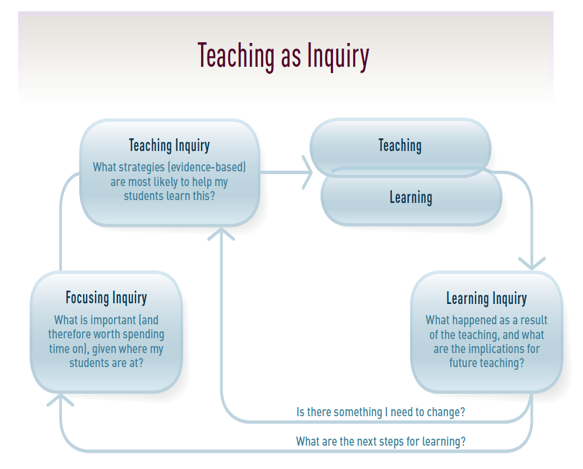
4. Write a reflection on your own professional learning through this inquiry cycle.
This inquiry has been a big cycle of learning for me. I have found myself asking many question like:
-Why is my reading shifting at a rate much faster then my writing?
-Why has my change practice not had the impact I had hope?
-How much time did I really spend on my changed practice and was it enough?
This inquiry as made me go back and think carefully about the practice that I may have lost over the years. I has also made me reflect on the most important parts of the writing and reading cycles.
To do this I have looked at the effective literacy practice books year 1-4. This lead me to change my practice and work more on who was writing. This was a key idea of Dr Jannie van Hees when she talked to us about the apprenticeship also.
I have learned a lot about what doesn't work also. The main thing I have found is that too much change too fast does not affect the change. In the future I want to be careful about all the elements I change and maintain the change over a longer period of time with more careful and close reflection on each individual element.
I also reflected that my classroom trend is different from that of the cluster data. I wondered if perhaps I need to draw on more experts within the cluster to change my practice. Perhaps more data gathering would be of benefit. I wonder how to best locate teacher in year 1-3 making significant shift in writing.
This inquiry has lead be to believe I still have a lot of work to do in my practice and as I reflect and discuss this challenge with many of my colleagues.
Saturday, 16 November 2019
Friday, 15 November 2019
Overall evaluation of your intervention
3. Write an overall evaluation of your intervention in terms of the causal chain you had theorised. i.e. To what extent was the intervention successful in changing factors such as teaching? To what extent were those changes in teaching effective in changing patterns of student learning?
Early in my inquiry I identified two key changes and theorised that impact of these changes see this blog post.
While I made these changes I found that due to a number of factors including, time in the classroom, changes of classroom teachers and inconsistency in my ability to regularly deliver these changed practices caused a lack of repetition in my approach. From my earlier inquiries including my 2016-2017 inquiry into reading fluency. I know that consistency and repetition of a teaching approach are important in creating learner growth.
While I wouldn't say my intervention failed I believe I did not give it a change to really succeed. While some of the factors that prevented this were beyond my control such as my co-teacher leaving, many were factors I should have had more control over. In future I will implement my intervention earlier and monitor myself better. For example making notes of how regularly I implemented each element and giving each element more time to work.
Early in my inquiry I identified two key changes and theorised that impact of these changes see this blog post.
While I made these changes I found that due to a number of factors including, time in the classroom, changes of classroom teachers and inconsistency in my ability to regularly deliver these changed practices caused a lack of repetition in my approach. From my earlier inquiries including my 2016-2017 inquiry into reading fluency. I know that consistency and repetition of a teaching approach are important in creating learner growth.
While I wouldn't say my intervention failed I believe I did not give it a change to really succeed. While some of the factors that prevented this were beyond my control such as my co-teacher leaving, many were factors I should have had more control over. In future I will implement my intervention earlier and monitor myself better. For example making notes of how regularly I implemented each element and giving each element more time to work.
Thursday, 14 November 2019
Summarise evidence of key shifts
2. Summarise evidence about key shifts in the problem of student learning.
The shift I have seen in Student learning are improved length of writing. This can been seen here in this blog post with evidence from one of my inquiry focus group. However I expected this to translate into improve E-Asstle writing score which it did not. I believe this is due to quantity not equalling quality of writing. E-Asttle score levels show overall only Two learners have moved beyond 1B while the rest remain as 1B writers with little to no change in scale score they.
My reading data when compared the reading level data on the same children from 2017-2018 that 9 out of the 11 learners have made more then one years shift compared the the slow shift of 6-9months they made in the 2018 school year. It also shows that 2 of the learners have made 2 or more years shift. Out of the group two learners did not make significant shift. These learners were both boys. One had large length of time away from school. The other has some interesting reading behaviour including very slow disconnected reading which I would like to explore more.
The shift I have seen in Student learning are improved length of writing. This can been seen here in this blog post with evidence from one of my inquiry focus group. However I expected this to translate into improve E-Asstle writing score which it did not. I believe this is due to quantity not equalling quality of writing. E-Asttle score levels show overall only Two learners have moved beyond 1B while the rest remain as 1B writers with little to no change in scale score they.
I believe this lack of change is not due to a lack of changed practice but due to a lack on time spent on this changed practice. Perhaps it is many changes that were not implemented over a long enough period of time that lead to this lack of change in writing.
At the beginning of this inquiry I hypothesise that a connections between reading and writing programs would help by 1B writers move beyond 1B while using practice I know work to improve reading.
What I have found is that I can maintain the improvements learners make in reading however I am not yet able to make these same improvements in writing.
It is interesting looking at the shift termly and seeing that for most learners the shift happened pretty consistently throughout the year.
These graphs show the same data but this time by reading age. Two learners in this focus group have moved to expected age for year 3, additional 6 have moved from over 2 years behind to just 1 year behind expected age. One learners made very little shift in age but made many levels and this is significant for him as he faces a number of other challenges in his learning.
While I am disappointed in the key shifts this year in writing the reading data gives me great hope. I do feel I need to think more about the characteristic of reading shown by the two learners who made limited shift and what I can do to address this. Much more thinking is needed to my part around writing reading connections and who I can pull my strengths in reading teaching to support my teaching in writing.
The Key changes I have made in my inquiry
1. Summarise evidence about key changes in teaching and other factors that influence student learning.
At the beginning of the year it was clear that there was a huge need for my learners in writing and reading. See this blog post.
This need lead me to look at my practice and think about what I was doing and what changes needed to be made to address the clear need in the data. As a result I tried a number of different practice aimed at building vocabulary in literacy and building writing capacity and skill.
As a result I tried a number of different things. Looking back perhaps to many different things and nothing for quite long enough but my practice definitely changed.
Each term I made a change based on reflections on student engagement, data and need.
Early in the year, Chrissy and I worked together with a focus on building oral language and written language through connection of reading and writing with a strong focus on oral record. We did this by focusing on an element of text, setting, character and plot for 1-2 week blocks and this being the main focus of all reading and writing with an aim of building descriptive language around each element.
Here are some example of what this looked like. We found that well the language used within their activities was similar to that they already had and that this was not maximising gifted language the way we had hope. Gifted language was used more in writing however.
Also in Term 2 (See blog post) I looked at how I could gift more language using the digital technologies. I found myself over gifting which and the learners were so overwhelmed. I learned from this experience.
In Term 3 we had some wonderful team professional development with Dr Jannie van Hees this made me think about the things that are missing in my program. What am I doing about sight words. I started using this approach and the kids said "I like writing the little word." "I write more this time."
I also filmed this lesson for my Manaiakalani Google Class Onair.
At the beginning of the year it was clear that there was a huge need for my learners in writing and reading. See this blog post.
This need lead me to look at my practice and think about what I was doing and what changes needed to be made to address the clear need in the data. As a result I tried a number of different practice aimed at building vocabulary in literacy and building writing capacity and skill.
As a result I tried a number of different things. Looking back perhaps to many different things and nothing for quite long enough but my practice definitely changed.
Each term I made a change based on reflections on student engagement, data and need.
This is an example of the children's created character and shares the same feature as the reading activity.
Here are some example of what this looked like. We found that well the language used within their activities was similar to that they already had and that this was not maximising gifted language the way we had hope. Gifted language was used more in writing however.
In Term 3 we had some wonderful team professional development with Dr Jannie van Hees this made me think about the things that are missing in my program. What am I doing about sight words. I started using this approach and the kids said "I like writing the little word." "I write more this time."I also filmed this lesson for my Manaiakalani Google Class Onair.
Thursday, 17 October 2019
It's time to evaluate, What do I do?
Today we are talking about the evaluation process of our inquiry and the intervention we have put in place. Thanks to Woolf Fisher for sharing these key ideas with us and I hope they will help you also.

In order to do this we need to look back at the data we collected before the invention. Having robust data before implementing and intervention.
By looking at this data you can identify change or shift of the learners. Then make a link to the changes you made in your teaching. This however is not enough, we need to make comparisons with the norm or other data sets (this could be another class, last years year 3, children not in the inquiry group). Children get better under normal teaching conditions so comparing to other data sets can show significant shift.

In order to do this we need to look back at the data we collected before the invention. Having robust data before implementing and intervention.
By looking at this data you can identify change or shift of the learners. Then make a link to the changes you made in your teaching. This however is not enough, we need to make comparisons with the norm or other data sets (this could be another class, last years year 3, children not in the inquiry group). Children get better under normal teaching conditions so comparing to other data sets can show significant shift.
This table shows a way of showing pre and post data. This could be done for both data sets and allow for great comparison.
When looking at number you can easily compare these however not all evidence is data.
talk about the what in detail, how do you know they were disengaged, struggled to spell etc. Why is it the biggest success.
What has shifted and why.
I have been asking myself a lot this term what has been the impact of my teaching? Have I really made a difference for these learners and how do I know?
This lead me to think back about the shifts I have been monitoring this year and the interventions I have put in place for my learners.
Below is a presentation that shows writing samples from one learner over 3 time points. It looks at what shift was made in terms of number of words, working out unknown words, content and punctuation. If you look through the presentation you will see that this learner has made a great deal of shift in these areas.
I included this example as the main way I monitor writing shift is through conferencing with the learners and looking closely at their writing looks.
Below is the reading shift for my class from term 4 2018 to term 3. The blue shows the starting point by number of students at each PM reading level and the red the number of students at each level in term 3. You can see we have had a large number of students shift however shifts have not been as significant as I would have liked.

This data shows level and age shift of my target learners. Many of whom have moved a number of levels but this has not meant a large shift in reading age.


During this reflection I have found that the interventions I have put in place have been beneficial for the learners however they have not been constant enough. This is due to time spent out of class with my CoL Across School Role and the changes that have happened in my space with year with changing co-teachers.
Monday, 23 September 2019
Inquiry update term 3
This term I have continue with write the little words this term a long with a focus on writing together. Trying to balance the I write, we write, you write in my classroom. I do not believe I have this balance right yet and hope that I will be the end of next term.
During this, I have noticed that modelling the experiences before the children do it helps to build the vocabulary for them. I did this in my chocolate fish writing and the quality of language used by the learners increased considerably.
I have also noticed an increase across the class of excitement about writing and want to write. With learner say “when can we do writing”, “Can I finish my writing now instead of playing a game” and “I love writing.”
I have also noticed the connections with reading. The learners who are excited about writing are also making good progress in reading. One learner has moved from level 12 to level 19 this year and her engagement in reading and writing has increased also.
Subscribe to:
Posts (Atom)


