Today I am at a very special event. We had the opportunity today to come together with teachers, leaders and passionate in what they do as teachers.
We are so privileged to have partners who support us as clusters through financial support, research support, all the families and people who make this possible.
Today we are celebrating all the people that are Manaiakalani by making connections. Today is about making friends and staying friends when we leave here today to make the connections last, so we can make it work.
Why we do this is for because we want our learners to be out there. Playing the game with style, passion, as themselves.
We have been on this journey now for sometime and we are clear in our ambition. Clear in using the data to inform positive change and innovation.
We want the learning journey that communities want to be in the forefront of education and consider what we do to make this possible when it does not match what they Ministry of Education goals for that community. We are lucky in New Zealand to have a government who are willing to listen and hear and see what is going on in Education and notice the shift being made in Manaiakalani.
Change, accelerated shift is not possible without Manaiakalani teachers throughout New Zealand, who collaborate together, accept challenges and innovating and finding what works.
Thursday, 1 November 2018
Tuesday, 30 October 2018
DMiC Developing assessment exemplars
We have had a lot of questions about how assessment works within the DMiC pedagogy.
What we discussed today is why are are assessing?
We assess for our teaching to know what we need to do. To identify gaps and see student needs. We also must consider what we are collecting with each assessment and how that will be used in our teaching.
When we assess we find gaps in what we have taught and what has been learnt and this allows us to adapt our teaching a find next steps for ourselves and our learners. We also need to be aware of how these assessment impacts on our awareness of students ability, needs and helps us to report to parents.
What does assessment involve?
We are using evidence to make decision for many different reasons. We also have to communicate the evidence that we find from assessment for parents, boards, government and of course our learners. This communication is for different purposes both summative and formative for kids that is setting goals for themselves a long side their teacher.
Aim:
Our aim for assessment is to create some exemplar that allow use to moderate the understanding across the school. We need to have exemplars that work for us and our school. We want to know the learning trajectory for our kids.
In order to create these exemplars we needed to first have unit plans, learning outcomes based on curriculum elaborations, a learning trajectory and assessing the learning.
Students can set goals for themselves for the unit and they can self assess these goals. This could be based on the use of a few problems in the area and creating a list of goals which students could select from. The amount of goals and how this works would depend the students, their needs and how the teacher scaffolds the goal setting.
The aim is the push the individual accountability.
The exemplar tasks could include open questions that ask for all of students knowledge of a question.
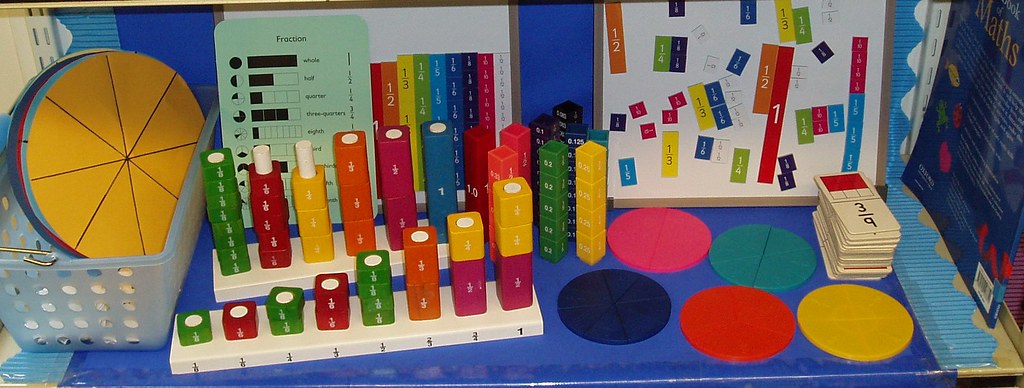
Write and draw everything that you know about one half and one quarter?
Heather says she can prove 3/5 is the same as 6/10
Can you show some different ways she might do this?
What other fractions are the same? Can you prove they are the same in at least three different ways?
Can you put the fractions in order from smallest to biggest:
2/3 3/4 5/10 3/9
Show how you know.
The aim of a DMiC lesson is to touch on many levels so that students can show what they know and see the possibility of them extending beyond their year level or below their year level.
We are creating a trajectory and learning outcomes for patterns and relationships:
What we discussed today is why are are assessing?
We assess for our teaching to know what we need to do. To identify gaps and see student needs. We also must consider what we are collecting with each assessment and how that will be used in our teaching.
When we assess we find gaps in what we have taught and what has been learnt and this allows us to adapt our teaching a find next steps for ourselves and our learners. We also need to be aware of how these assessment impacts on our awareness of students ability, needs and helps us to report to parents.
What does assessment involve?
We are using evidence to make decision for many different reasons. We also have to communicate the evidence that we find from assessment for parents, boards, government and of course our learners. This communication is for different purposes both summative and formative for kids that is setting goals for themselves a long side their teacher.
Aim:
Our aim for assessment is to create some exemplar that allow use to moderate the understanding across the school. We need to have exemplars that work for us and our school. We want to know the learning trajectory for our kids.
In order to create these exemplars we needed to first have unit plans, learning outcomes based on curriculum elaborations, a learning trajectory and assessing the learning.
Students can set goals for themselves for the unit and they can self assess these goals. This could be based on the use of a few problems in the area and creating a list of goals which students could select from. The amount of goals and how this works would depend the students, their needs and how the teacher scaffolds the goal setting.
The aim is the push the individual accountability.
The exemplar tasks could include open questions that ask for all of students knowledge of a question.
Write and draw everything that you know about one half and one quarter?
Heather says she can prove 3/5 is the same as 6/10
Can you show some different ways she might do this?
What other fractions are the same? Can you prove they are the same in at least three different ways?
Can you put the fractions in order from smallest to biggest:
2/3 3/4 5/10 3/9
Show how you know.

The aim of a DMiC lesson is to touch on many levels so that students can show what they know and see the possibility of them extending beyond their year level or below their year level.
We are creating a trajectory and learning outcomes for patterns and relationships:
Tuesday, 23 October 2018
Inquiry update Term 4
This year I have learnt a lot so far but also seen some gaps in my teaching and my implementation. Recently I tested my inquiry group on the gloss test again and conducted the vocabulary survey again.
My findings were interesting.
What I noticed was that three of the six in my target group have made progress in some areas of maths. I found the shift in fractions interesting was this area is high in topic specific vocabulary that students did not know earlier in the year. This links to the data form the vocabulary survey in which I found students understanding of mathematical language tested earlier in the year had improved greatly.

I am wondering if Students A and B's lack of shift has to do with the way in which they engage with others in mathematics as these students skill struggle to talk positively to others and share their ideas in DMiC.
My findings were interesting.
Gloss
What I noticed was that three of the six in my target group have made progress in some areas of maths. I found the shift in fractions interesting was this area is high in topic specific vocabulary that students did not know earlier in the year. This links to the data form the vocabulary survey in which I found students understanding of mathematical language tested earlier in the year had improved greatly.
Vocabulary Survey

I am wondering if Students A and B's lack of shift has to do with the way in which they engage with others in mathematics as these students skill struggle to talk positively to others and share their ideas in DMiC.
Tuesday, 16 October 2018
Getting Feedback
Throughout term 3 I have been working on creating a site and physical prompts that will support students to have in depth conversations in maths.
This site draws on students created videos as models for vocabulary and language scaffolds.
What did you find useful on this site?
The layout was clear and things were easy to find and seem easy to use.
I liked the layout of the QR code links - vocabulary item with a explanatory video featuring 'real' kids using the target word - great to see the vocabulary item in action with real kids.
I loved exploring this site. It left me with a thirst for wanting more. I loved the connections students can make through the use of QR codes to link a rewindable video of peers explaining their maths thinking. I actually found your ideas regarding coding extremely helpful as that is what I want to be exploring next Term. Your videos to explain activity to students is just what I needed as a teacher.... and is exactly what other teachers that are new to coding will need. I thought the information on each page was simple and easy to read.
More videos showing the kids using the QR codes.
Videos of what the QR codes link to. I would have loved to see these videos on this page. A short description of the DIMC theory about the benefits/power of students explaining their thinking (the why behind what you are doing).
Two out of three people who have given feedback so far said they would use the site. The other stated that she felt the content was to young for her year 7 & 8 class.
If yes how do you see it being used?
I would love to use the student prompt videos especially when introducing them to my groups next year.
I would love to try using this with my students next term, using Tamaki student videos. I think this is a great way to consolidate their understanding. I will also use this site to explore coding with my students, something I have wanted to do for sometime. Love these videos.
Any additional ideas or feedback
I would like to adapt the idea and use QR codes within Literacy to help build students vocabulary knowledge/retention/understanding.
Wow you are an inspiration! Love what you are doing at Point England. Your passion shines through in your site. Keep on sharing!
Thank you very much to the kind people who have given feedback so far. I hope to add a section on the site with more specific detail about the DMiC approach to Mathematics. I would also love to start working with other teachers to build up the content on the site and will be contacting some of the teachers who gave feedback to see if this is of interest to them.
This site draws on students created videos as models for vocabulary and language scaffolds.
As I feel this site, the prompts and QR codes are working well for me and my class I wanted to share the resource and see what other teachers thought about its potential use in their classrooms.
Here are the questions I asked and some of the feedback I have received so far.
The layout was clear and things were easy to find and seem easy to use.
I liked the layout of the QR code links - vocabulary item with a explanatory video featuring 'real' kids using the target word - great to see the vocabulary item in action with real kids.
I loved exploring this site. It left me with a thirst for wanting more. I loved the connections students can make through the use of QR codes to link a rewindable video of peers explaining their maths thinking. I actually found your ideas regarding coding extremely helpful as that is what I want to be exploring next Term. Your videos to explain activity to students is just what I needed as a teacher.... and is exactly what other teachers that are new to coding will need. I thought the information on each page was simple and easy to read.
What else would you like to see on this site?
Videos of what the QR codes link to. I would have loved to see these videos on this page. A short description of the DIMC theory about the benefits/power of students explaining their thinking (the why behind what you are doing).
Two out of three people who have given feedback so far said they would use the site. The other stated that she felt the content was to young for her year 7 & 8 class.
If yes how do you see it being used?
I would love to use the student prompt videos especially when introducing them to my groups next year.
I would love to try using this with my students next term, using Tamaki student videos. I think this is a great way to consolidate their understanding. I will also use this site to explore coding with my students, something I have wanted to do for sometime. Love these videos.
Any additional ideas or feedback
I would like to adapt the idea and use QR codes within Literacy to help build students vocabulary knowledge/retention/understanding.
Wow you are an inspiration! Love what you are doing at Point England. Your passion shines through in your site. Keep on sharing!
Thank you very much to the kind people who have given feedback so far. I hope to add a section on the site with more specific detail about the DMiC approach to Mathematics. I would also love to start working with other teachers to build up the content on the site and will be contacting some of the teachers who gave feedback to see if this is of interest to them.
I would love any additional feedback. So please feel free to check out and potentially use this site in your classroom. If you do I would really appreciate your feedback which can be given through this form.
Monday, 17 September 2018
Digital Fluency Intensive Northland Cohort #2
Last week I had the privilege of sharing my experiences with the wonderful group at the Digital Fluency Intensive Northland Cohort #2. I am so great for this experience and I find that every time I go up North and share (this being my second time) I find myself humbled by the commitment and passion of the teachers as they learn what they need to know to embark on their journey to develop their classroom.
The day focused on learning to develop our classroom site focusing on the users and the purpose of our sites. We talked a lot about why we make and use class sites and how having a clear plan and layout helps to make our sites effective.
It was incredible seeing the Cohort setting big goals and working hard to achieve them. I really enjoyed helping different teachers identify challenges for them and supporting them to overcome these. The challenged ranged from creating buttons to embedding content.
At the end last week I got some wonderful feedback from Kerry and the Cohort:
Hi Clarelle
I was really grateful for this feedback and for all the people who supported me and gave me this opportunity to share.
The day focused on learning to develop our classroom site focusing on the users and the purpose of our sites. We talked a lot about why we make and use class sites and how having a clear plan and layout helps to make our sites effective.
It was incredible seeing the Cohort setting big goals and working hard to achieve them. I really enjoyed helping different teachers identify challenges for them and supporting them to overcome these. The challenged ranged from creating buttons to embedding content.
At the end last week I got some wonderful feedback from Kerry and the Cohort:
Hi Clarelle
It was lovely to have you here with us this week on our Digital Fluency Intensive, thank you so much for coming and sharing your expertise. I think everyone now has their sites well underway and looking pretty fancy!
Robyn said you really helped her put things into perspective with how to organise and upload her iPad resources to her site, you'll probably hear from her if she gets a bit stuck. With your help Sue from Kawakawa was happy with the improvements she made to her class site and Dani left you a nice comment on her blog, click here for the full post
After looking at Clarelle's class site, I have gotten some ideas for how to link in Explain Everything activities to my slides and she is happy for me to use and adapt some of the activities accessible on her site - Thanks Clarelle!
I was really grateful for this feedback and for all the people who supported me and gave me this opportunity to share.
Tuesday, 11 September 2018
DMiC Professional learning
Social and Academic Status
Updated 12 April 2019
How does status change in our classroom. When do children hold academic status. Children who have a range of language stills seem to have more status to the other kids. Status is given for many reasons and this can impact the way that children interact. Can we plan our lessons to change the status for kids? How can we talk as teacher to evaluate or change the status?
How does this affect behaviour?
-Children will often raise to the belief of others. If one thinks I can do it then why should I.
-If children believe that someone else holds all the power they may choose not to share.
What we believe about our academic abilities and those of others is often form my our perceptions rather than reality.
What we value and push for in mathematics will be reflected in the way the children engage in maths.
What do I think the kids think being smart in maths look like:
-Sharing their ideas
-Explaining their thinking
I want to support students to think about:
-Never giving up
-Challenging each others thinking
We read an article by Jo Boaler. This article talked about the different elements of maths.
Multidimensional Classrooms
This talked about elements of a multidimensional class. It talked about adapting the problems so they are group worthy. Every child has something to add. We can get students to share a small part and this can add status and support the whole groups thinking.
In the classroom this looks like an expectation that everyone can participate. The problem is open to multiple strategies and potentially answers. Children learn that there is no correct way of doing it, they can all achieve.
Assigning Competence
This is when the teacher actively raises the status of the students by praise the Mathematical thinking and sharing. This can be done to provoke the class to think about an idea but also build students confidence, status and increases the visibility of the students ideas which could be missed if the teacher did not actively engage and support that student by raising the status of their idea. As a teacher it is important to be specific about what you are praising as this make sure that students know it is not empty praise.
It is about how we know our children and what praise works best for them to assign competence. It is all about relationships. It requires the ability to step back and open your ears to the groups that are working to pick up what working. It is about setting the expectation that they share that great idea that you heard.
Student responsibility
Getting students to take responsibility for the groups thinking. Removing the individual responsibility and put it on the group to make sure everyone understand and can justify. This can be done by the teacher coming in with a question for one student and then if the student doesn't know moving away and giving the responsibility back to the group to support the development of this thinking. This can be feed in through the group norm discussion and the praise you provide. We talked about how this links to the vocabulary because students need to explain their ideas. Even if a group really struggles there is so much you can praise and affirm because mathematicians do not always get to a fully formed answer.
This needs to be a part of our groups norms, we should expect that everyone understands and enough students to say "I don't understand" and get them to ask questions. The more to praise the student responsibility and when they take these responsibilities for their own learning so students know that this is what we do it maths. Reasoning and providing evidence is a key skill our kids need to succeed in education and life.
Don shared an example in which and group did nothing they could not start. During the sharing back the teacher said "You are the most important group, you struggled today and so it is everyones responsibility to make sure you understanding and it is your responsibility to ask questions."
This needs to be a part of our groups norms, we should expect that everyone understands and enough students to say "I don't understand" and get them to ask questions. The more to praise the student responsibility and when they take these responsibilities for their own learning so students know that this is what we do it maths. Reasoning and providing evidence is a key skill our kids need to succeed in education and life.
Don shared an example in which and group did nothing they could not start. During the sharing back the teacher said "You are the most important group, you struggled today and so it is everyones responsibility to make sure you understanding and it is your responsibility to ask questions."
High expectations
Students appreciate challenge, having difficult problems and making sure you push students forward with critical questions and getting them to use these with each other. Again it comes down to how it it set up in your class and what you expect.
If you have a question ask each other not the teacher. It is all about putting the responsibility back on the learners. What do you think? It is also about encouraging them to consider more than one way of solving a problem. This can be effective for higher level learners, sometimes drawing out the problem is extremely challenging with complex problems.
Effort over ability
Praising what students have done and reminding them they can keep stepping up and doing more. Praise those who lesson and try their very best. Make sure no matter what the ability of the students they are pushed and challenged so they put in all the effort they can. This builds students who keep going and trying even when faced with huge challenges.
You gotta get up and try, try, try -Pink It is about being motivational in the way you encourage learners to try. Celebrate the little things praising the little moments. By choosing a group that didn't get it right you are able to praise effort over ability.
Learning Practices
This is about stopping at any point and revisiting the learning practices. What are we doing to learn? This can link back to the class norms. Teacher need to know what practices you are looking for and value will help you to notice and praise and teach to this practices.
Thursday, 6 September 2018
Co-Teaching a privilege and an honour
As teachers we are always so focused on student learning. Our inquiry focuses on the needs of the children and how we can address these. We are always looking at, talking about and using data to support make sure we are doing all we can to support students learning.
I have blogged about this a lot, so this blog post will be different.
I wanted to reflect on some of the big changes that have happened for me over the last 3 years and what impact they have had on how I teach and particularly how I teach with others.
I have blogged about this a lot, so this blog post will be different.
I wanted to reflect on some of the big changes that have happened for me over the last 3 years and what impact they have had on how I teach and particularly how I teach with others.
2016: This was a year of new for me, a year of intense learning with MDTA, working in a shared space with 2 other teachers and of course learning to teach and learn using digital technologies to enhance learning. This year was huge but in the all the learning I took in so much but didn't nessairly have time to process it all and see just how far I had come.
2017: This year was still very busy but I see it as the year of time. Of course I am a teacher so there is never enough time but this year I worked in a single cell class and had time to apply to skills I had learnt and had time to process the huge amount of skills I had learnt and really find out who I am as a teacher.
2018: This year I feel like a co-teacher! I feel that within our two teacher space we work as almost one. Sharing everything, asking questions and most of all learning together and from each others. It is strange how much you can learn in three years. But I know that my journey this given me the skills, passion and ability to co-teach and learn.
What I believe are the key things to co-teaching:
- Know who you are as the teacher.
- Know what you bring.
- Notice the what your co-teacher brings
- Take every chance to learn
- Take every chance to teach together and have a shared voice.
- Be honest and open, ask questions and discuss issues.
This year I am privileged to work with a Chrissy who has a passion and eye for art. As a result of our Co-teaching I have become an art teacher and my passion for teaching art has grown. I hope that you have the chance to Co-teach and learn together with the wonderful teachers around you. Even if they are not in the class with you every day make the most of what they bring because we are stronger together.
Subscribe to:
Posts (Atom)